

The accordion is a portable, box-shaped musical instrument that produces sound by pushing air through reeds using a bellows. It is played by pressing keys or buttons, which open valves to allow air to flow through specific reeds. Originating in Europe in the early 19th century, the accordion is widely used in folk, classical, and popular music around the world. Its distinctive sound and versatility have made it significant in genres such as polka, tango, and zydeco.
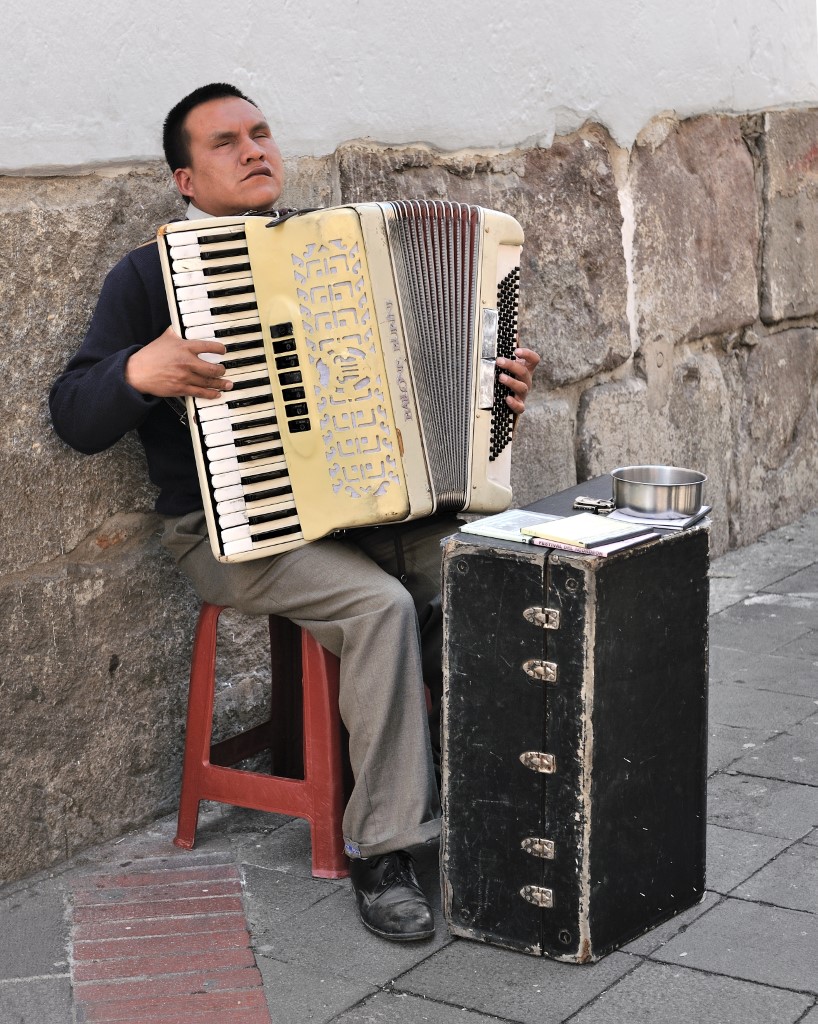
Blind accordion player in a street in the historic centre of Quito, Ecuador. © Wikimedia.org/Cayambe, CC BY-SA
The acoustic bass guitar is a stringed instrument that resembles a traditional acoustic guitar but is larger and tuned to the same pitch as an electric bass guitar. It is primarily used in genres such as folk, jazz, and unplugged performances where an amplified bass might not be suitable. The instrument is known for its deep, resonant sound and is often played with either fingers or a pick. Its development in the late 20th century provided bassists with a portable, acoustic option for live and studio settings.

Ashton acoustic bass guitar. © Wikimedia.org/Andrewa, CC BY-SA
An acoustic guitar is a stringed musical instrument that produces sound acoustically through the vibration of its strings and the resonance of its hollow body. It is widely used in various genres of music, including folk, classical, and pop, and has a long history dating back centuries. The acoustic guitar is known for its versatility and portability, making it one of the most popular instruments worldwide. Its design typically includes six strings, though variations exist.

© Wikimedia.org/Massimo Giuliani, CC0
The adungu is a traditional stringed musical instrument originating from Uganda. It is a type of arched harp played by various ethnic groups, particularly the Alur people. The instrument is known for its unique sound and is used in both ceremonial and social music. The adungu varies in size and can be played solo or as part of an ensemble.
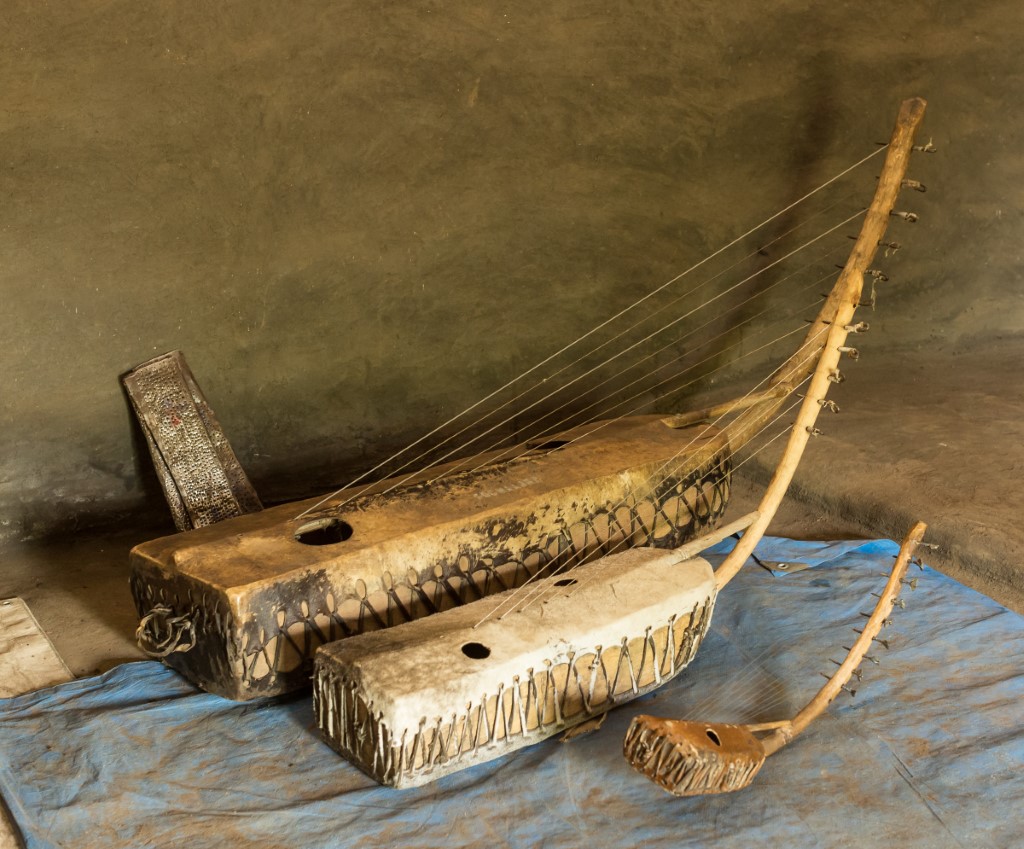
Three varying sizes of the stringed musical instrument of northwestern Uganda called an adungu, ekidongo, or ennenga. The large adungu creates an incredibly rich, bass sound. Photo taken at a Baptist church in Adjumani Refugee Settlement, Uganda. © Wikimedia.org/Rwhaun, CC BY-SA
An Aeolian harp is a musical instrument that produces sound when air passes over its strings, creating harmonic tones. Named after Aeolus, the Greek god of the wind, it originated in Europe and became popular during the Romantic period. The instrument is typically placed in windows or outdoors, allowing natural breezes to 'play' it.
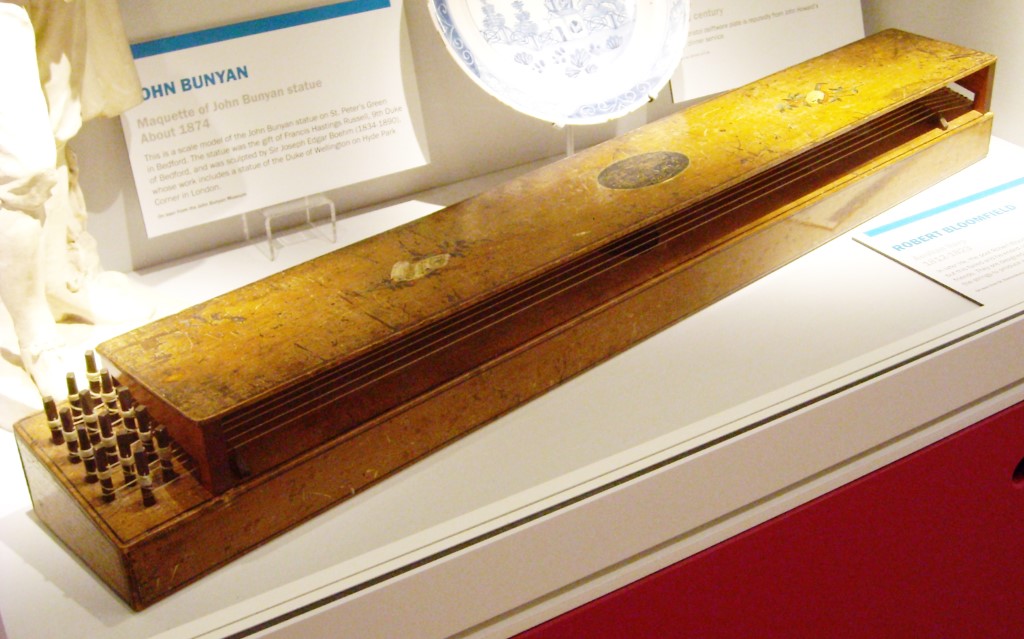
An aeolian harp, made by Robert Bloomfield between 1812 and 1823. On display in The Higgins museum and gallery, Bedford. © Wikimedia.org/Simon Speed, CC0
Afoxé is a type of Brazilian musical instrument and also refers to a musical group or performance style associated with Afro-Brazilian culture. The instrument consists of a gourd wrapped in a net of beads, producing a rhythmic sound when shaken. Afoxé music is particularly linked to Carnival celebrations and the preservation of African cultural traditions in Brazil.
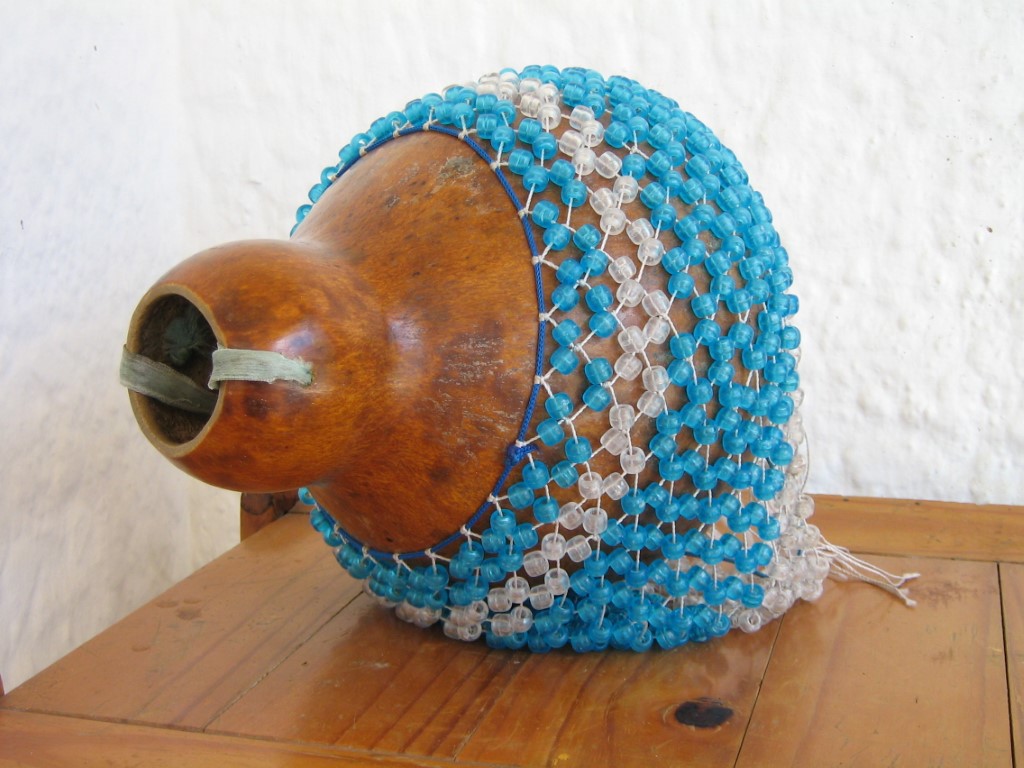
Abê, also called agbê or afoxê, Brazilian instrument, mostly used in Afro-Brazilian music. This particular instrument was made by my girlfriend. © Wikimedia.org/LeRoc, CC BY-SA
The agogo is a percussion instrument originating from West Africa, consisting of two or more metal bells of differing sizes connected together. It is widely used in traditional African music as well as in samba and other Brazilian musical styles. The agogo produces a bright, resonant sound when struck with a stick and plays a key role in rhythm sections.
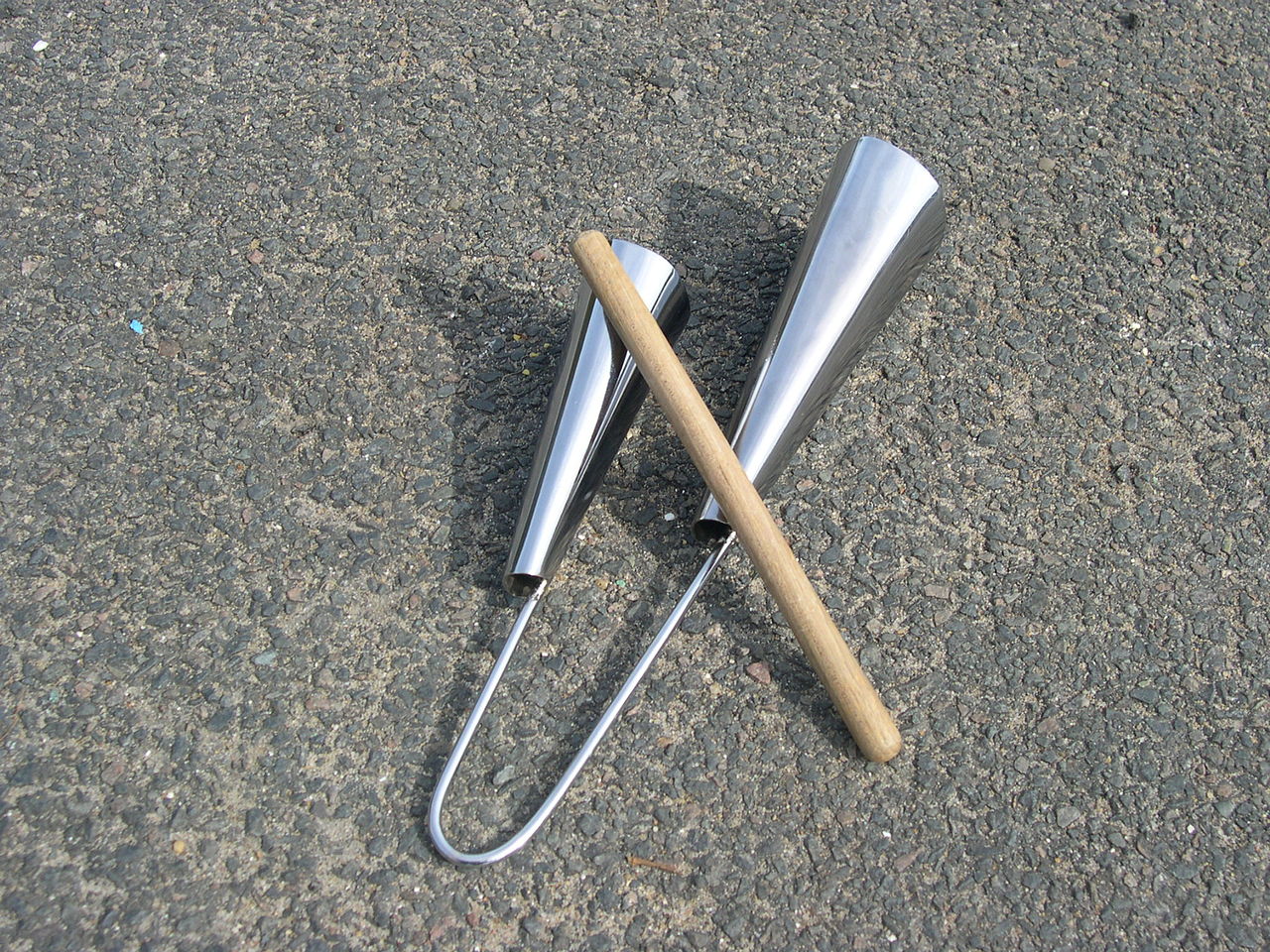
Chrome steel agogo with two bells and its wood stick. © Wikimedia.org/Alno, CC BY-SA
Agung is the name of a prominent volcano located on the Indonesian island of Bali. Mount Agung is the highest point on the island and is considered sacred by the local Balinese people. The volcano is known for its eruptions, with significant activity recorded in the 20th and 21st centuries. It plays an important role in Balinese culture, religion, and geography.
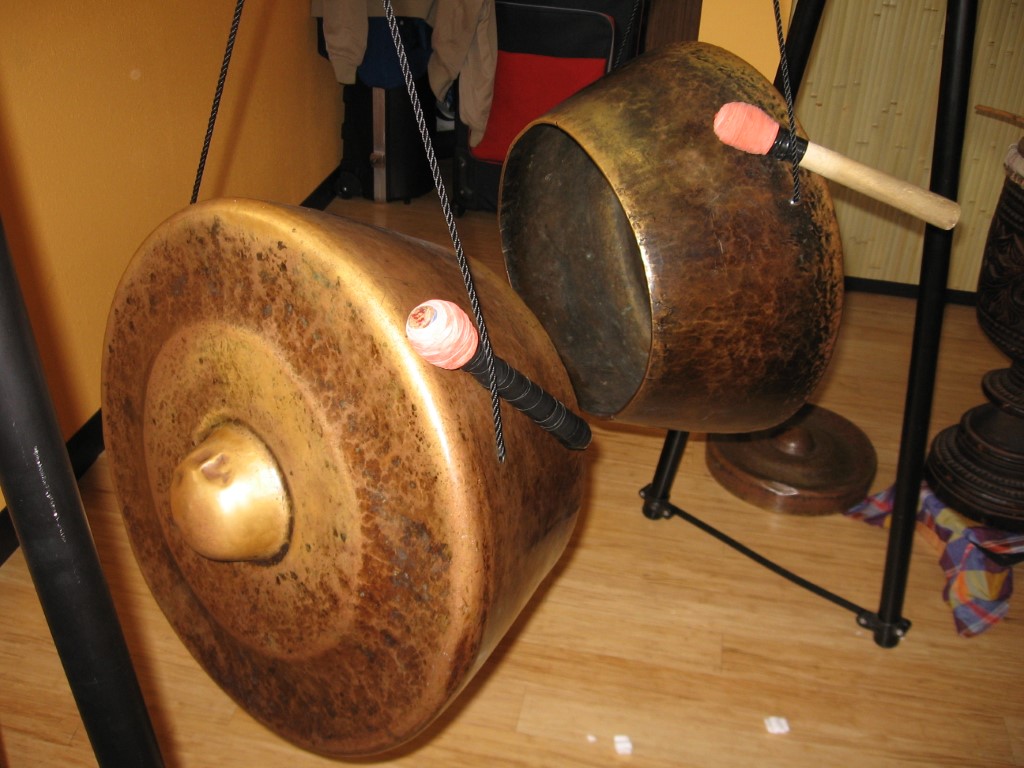
The two Philippine vertically hanged, wide-rimmed gongs known as the agung used as a supportive/accompanying instrument in the kulintang ensemble. © Wikimedia.org/PhilipDM, CC BY-SA
An air horn is a device that produces a loud, attention-grabbing sound using compressed air. It is commonly used at sporting events, on boats, and in emergency situations to signal or alert people over long distances. Air horns are valued for their portability and effectiveness in noisy environments.

Steam whistle manufactured for a supertanker by Chadburn Engineering Ltd. On display at the Merseyside Maritime Museum, Liverpool, England. © Wikimedia.org/Reptonix, CC BY
The ajaeng is a traditional Korean string instrument, classified as a zither, played with a bow. It is known for its deep, resonant sound and is used in both court and folk music. The instrument originated in China and was introduced to Korea during the Goryeo Dynasty, where it became an important part of Korean musical heritage.

© Wikimedia.org/Sguastevi, CC BY-SA
Akkordolia is a type of musical instrument, specifically a keyboard instrument that produces chords automatically. It was developed in the early 20th century and is related to the harmonium and accordion. Akkordolia instruments were used primarily for accompaniment in popular and folk music.
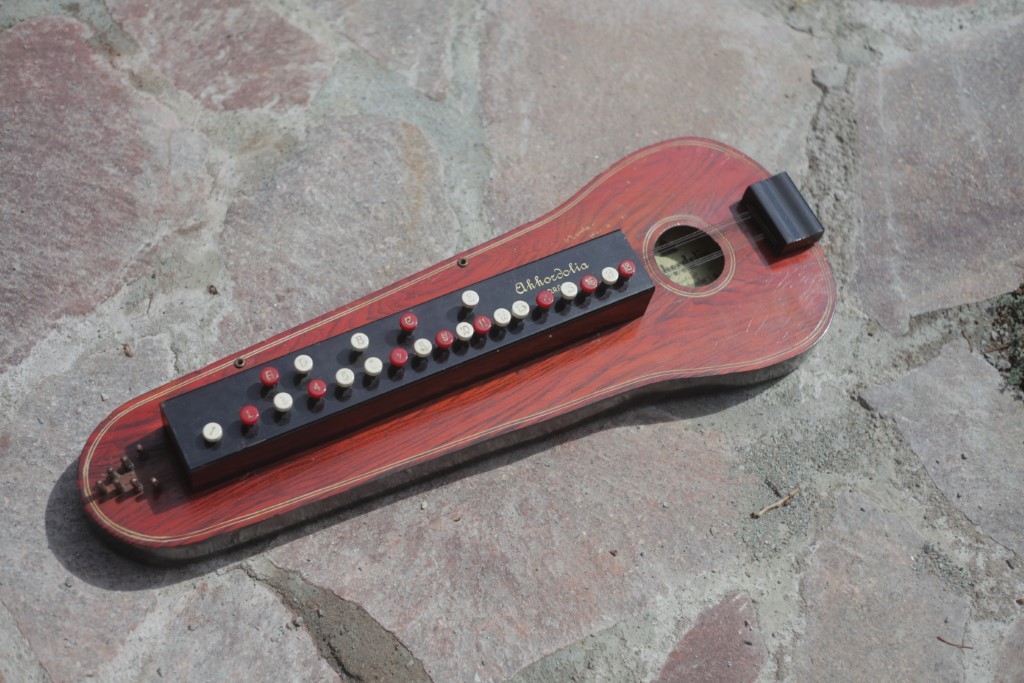
Akkordolia produced by Otto Teller in Klingenthal / Germany around 1935 © Wikimedia.org/KaiUweBehrmann, CC BY-SA
The alboka is a traditional Basque musical instrument, classified as a type of double clarinet. It is known for its distinctive sound, produced by blowing into two cane pipes fitted with reeds, and is often used in Basque folk music. The alboka has cultural significance in the Basque Country of Spain and France, where it is played at festivals and celebrations.
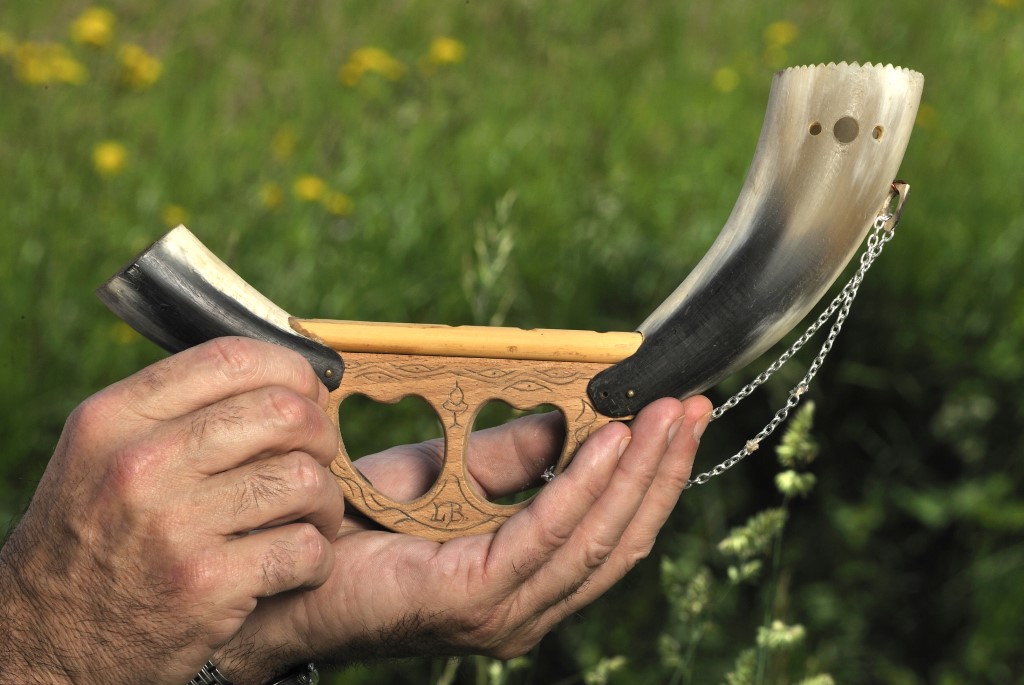
Alboka, basque musical instrument. Basque Country. © Wikimedia.org/Mikel Arrazola, CC BY-ES
The alfaia is a traditional Brazilian bass drum used primarily in the music and dance style known as maracatu, originating from the northeastern state of Pernambuco. Made from wood and animal skin, the drum is played with sticks and produces deep, resonant sounds. It plays a central role in Afro-Brazilian cultural performances and festivals. The alfaia reflects the region's musical heritage and African influences.
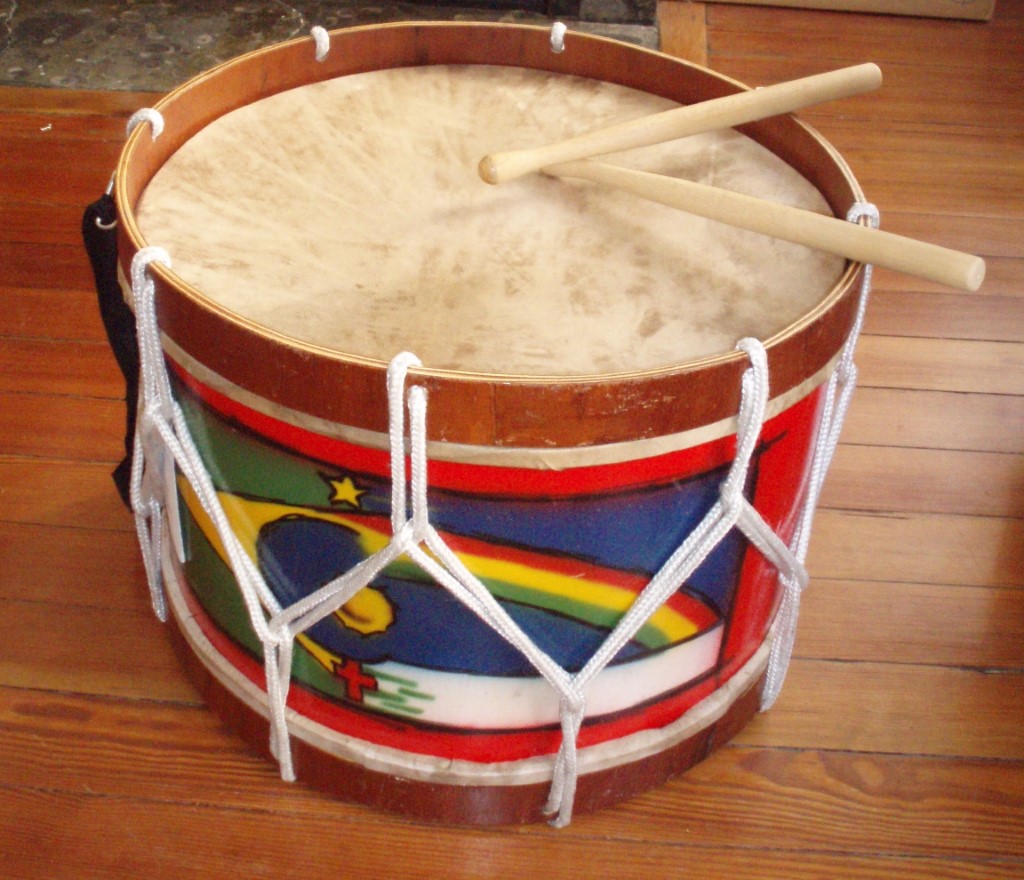
Alfaia (tambour de Maracatu) © Wikimedia.org/Lionel Baur, CC BY-SA
The algaita is a traditional double-reed wind instrument commonly found in West African music, particularly among the Hausa and Kanuri peoples. It resembles an oboe and is made from wood, with a flared bell and finger holes. The algaita is used in ceremonial and festive occasions, producing a distinctive, penetrating sound. It holds cultural significance in the musical traditions of the Sahel region.
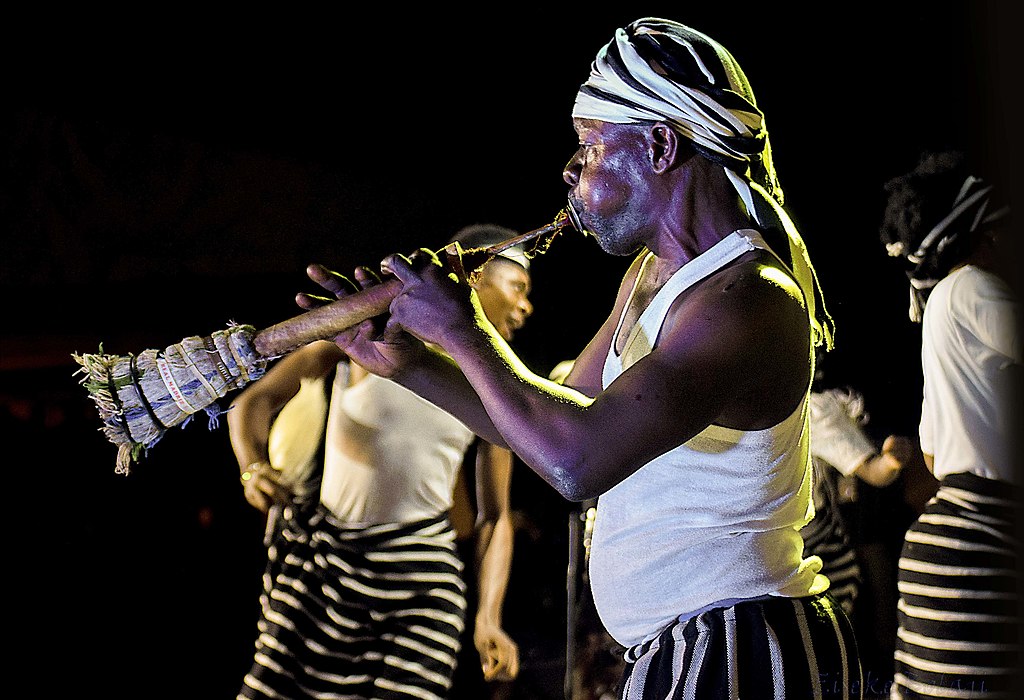
The algaita (also spelled alghaita, algayta or algheita) is a double reed wind instrument from West Africa, especially among the Hausa and Kanuri peoples. © Wikimedia.org/Eieke Bolaji, CC BY-SA
The alphorn is a traditional wind instrument made of wood, associated primarily with the mountainous regions of Switzerland and neighboring countries. It is known for its long, curved shape and deep, resonant sound, historically used for communication in the Alps. The alphorn is now commonly played at cultural events and festivals, symbolizing Swiss heritage.
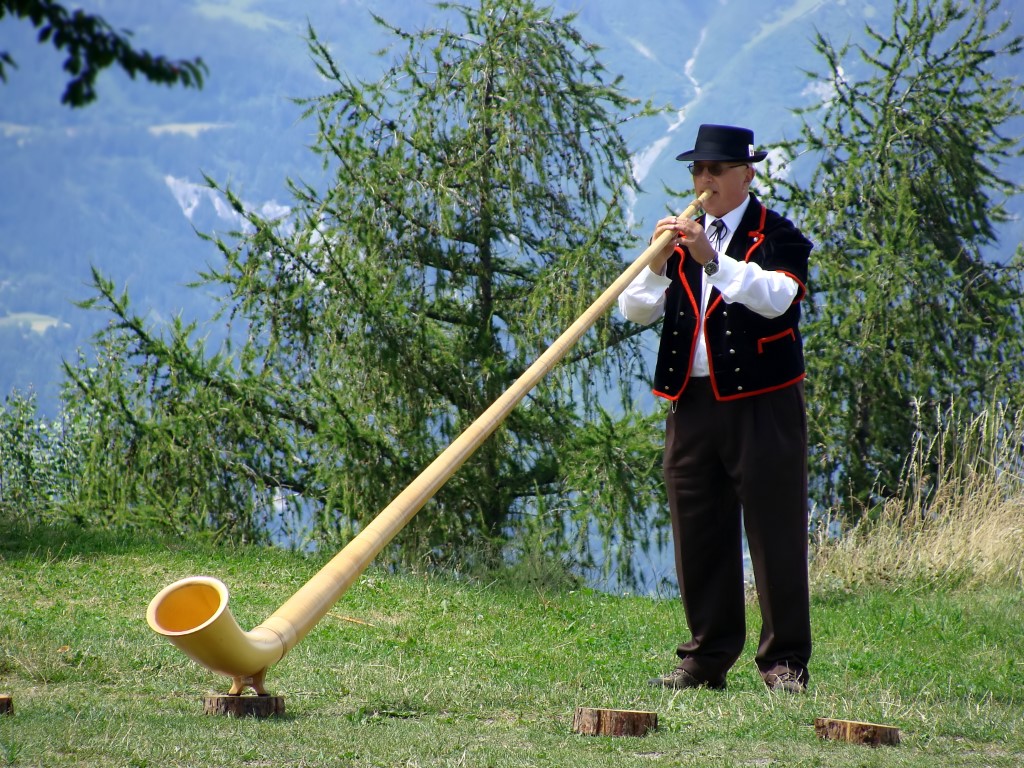
Alphorn player in Nendaz, Wallis, Switzerland. © Wikimedia.org/Hans Hillewaert, CC BY-SA
The angklung is a traditional musical instrument made of bamboo tubes, originating from Indonesia. It produces sound when shaken, with each instrument tuned to a specific pitch, allowing for ensemble performances. The angklung holds cultural significance and is recognized by UNESCO as an Intangible Cultural Heritage of Humanity. It is often played during ceremonies, festivals, and educational activities in Southeast Asia.
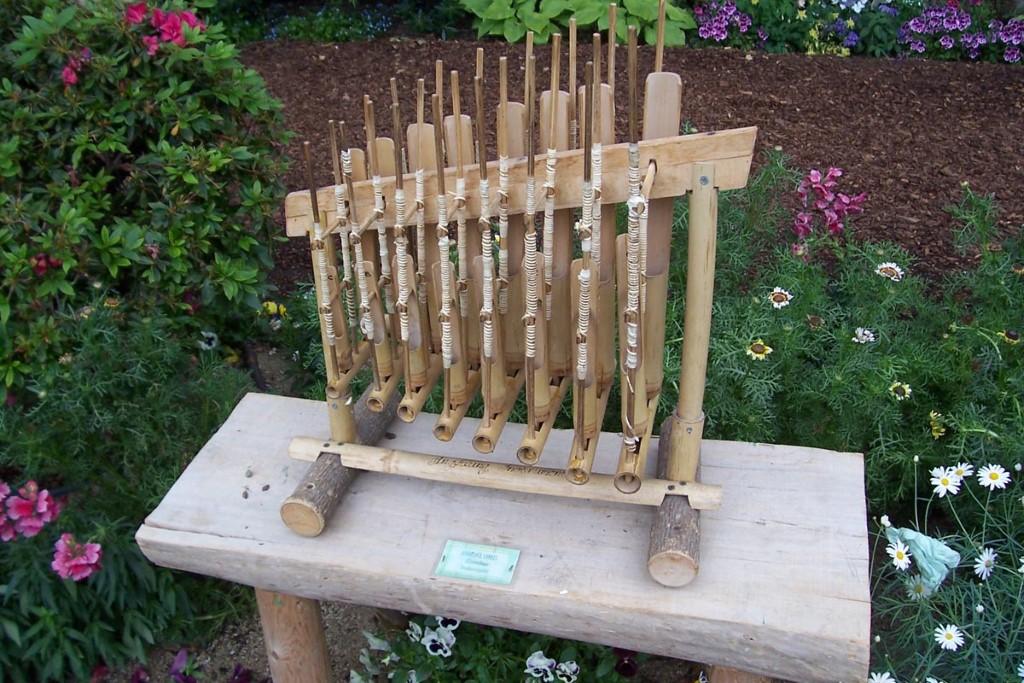
A bamboo musical instrument called an angklung, which is found primarily in Indonesia. This example was part of a themed exhibit for the Floral Show Dome at the Mitchell Park Horticultural Conservatory in Milwaukee, Wisconsin. © Wikimedia.org/Sulfur, CC BY-SA
The Appalachian dulcimer is a traditional stringed musical instrument originating from the Appalachian region of the United States. It is known for its distinctive hourglass shape and gentle, melodic sound, often used in folk music. The instrument holds cultural significance in American folk traditions and is played by strumming or plucking the strings while it rests on the player's lap.
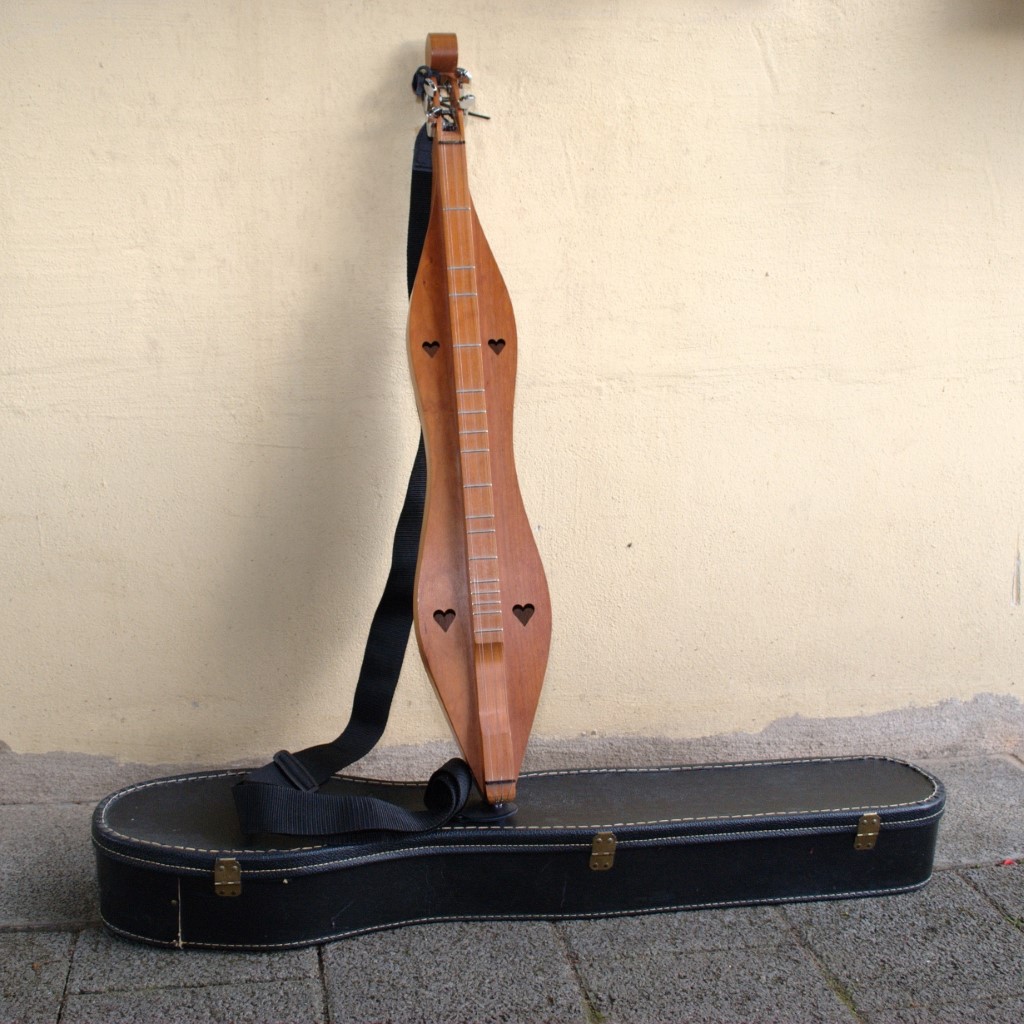
An Appalachian dulcimer. © Wikimedia.org/UpperPalatine, CC BY
The arpeggione is a six-stringed musical instrument invented in the early 19th century by Johann Georg Stauffer. It is played with a bow like a cello but has frets and is tuned like a guitar. The instrument is best known today for Franz Schubert's 'Arpeggione Sonata,' written specifically for it.

Austrian; Arpeggione; Chordophone-Lute-bowed-fretted © Wikimedia.org/Johann Georg Staufer, CC0
The ashiko is a type of drum that originates from West Africa, particularly among the Yoruba people of Nigeria. It is typically shaped like a truncated cone and played with the hands. The ashiko is known for its deep, resonant sound and is used in traditional music, ceremonies, and contemporary world music ensembles.
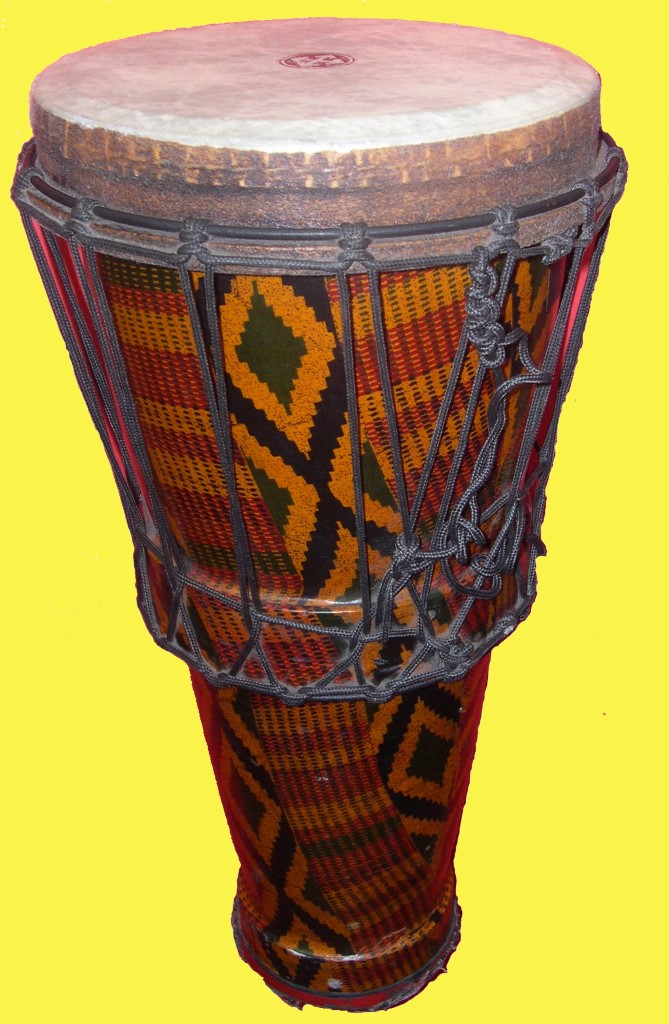
The atabaque is a tall, hand-played drum of Afro-Brazilian origin, traditionally made from wood and animal skin. It is known for its deep, resonant sound and is commonly used in music for capoeira, candomblé, and other Afro-Brazilian cultural practices. The instrument plays a key role in maintaining rhythm and supporting group performances. Its use reflects the influence of African musical traditions in Brazil.
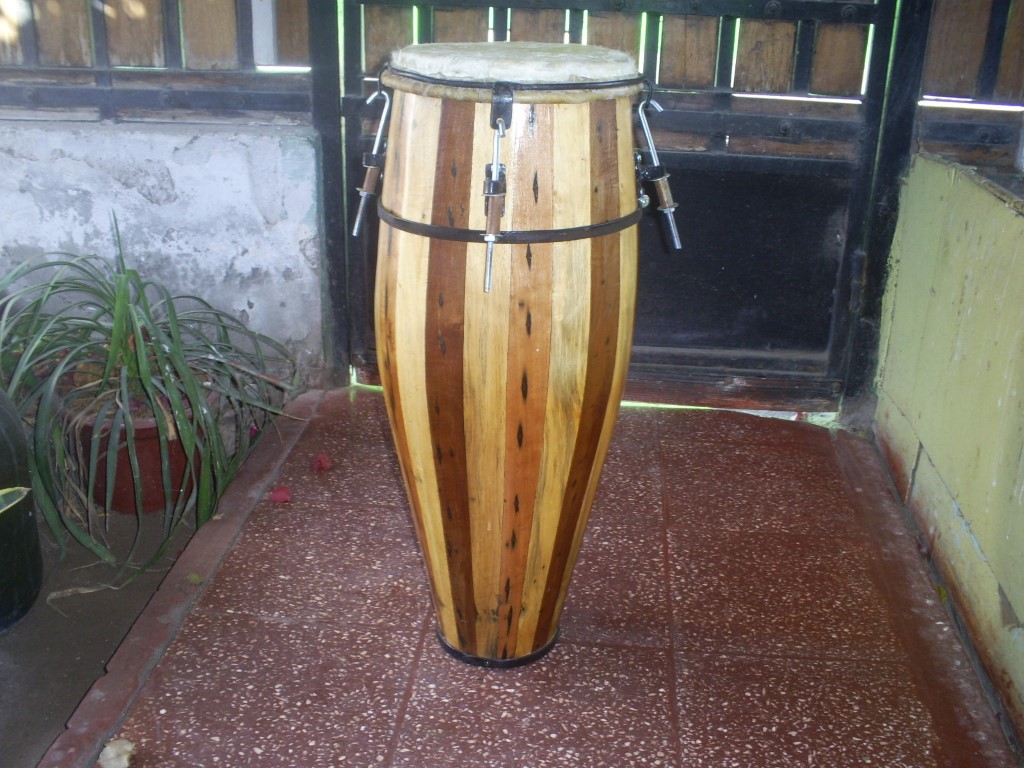
Afro-Brazilian percussion instrument, made by Pancho Piñones Chavez, Arica - Chile © Wikimedia.org/Akuma rasta, CC BY-SA
The autoharp is a stringed musical instrument belonging to the zither family. It is known for its chord bars, which mute certain strings to allow easy playing of chords by pressing buttons. Originating in the late 19th century, it is often used in folk and country music. Its ease of use and distinctive sound have made it popular in music education and performance.
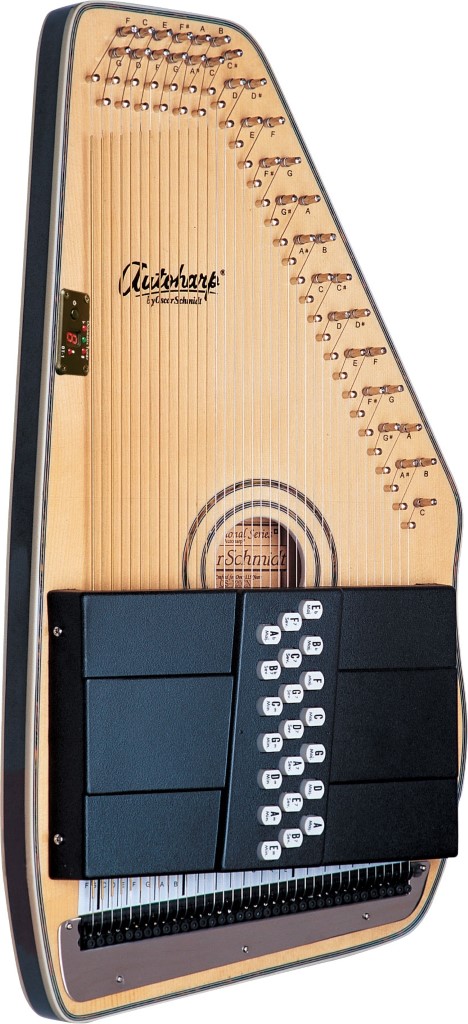
Oscar Schmidt Autoharp (2013-06-09 12.46.31 by David Hilowitz) © Wikimedia.org/David Hilowitz, CC BY
The babendil is a type of gong used as a musical instrument in the Philippines, particularly among indigenous groups in Mindanao. It serves as a timekeeper in traditional kulintang ensembles, marking the rhythm for other instruments. The babendil is significant in Filipino cultural and musical heritage.
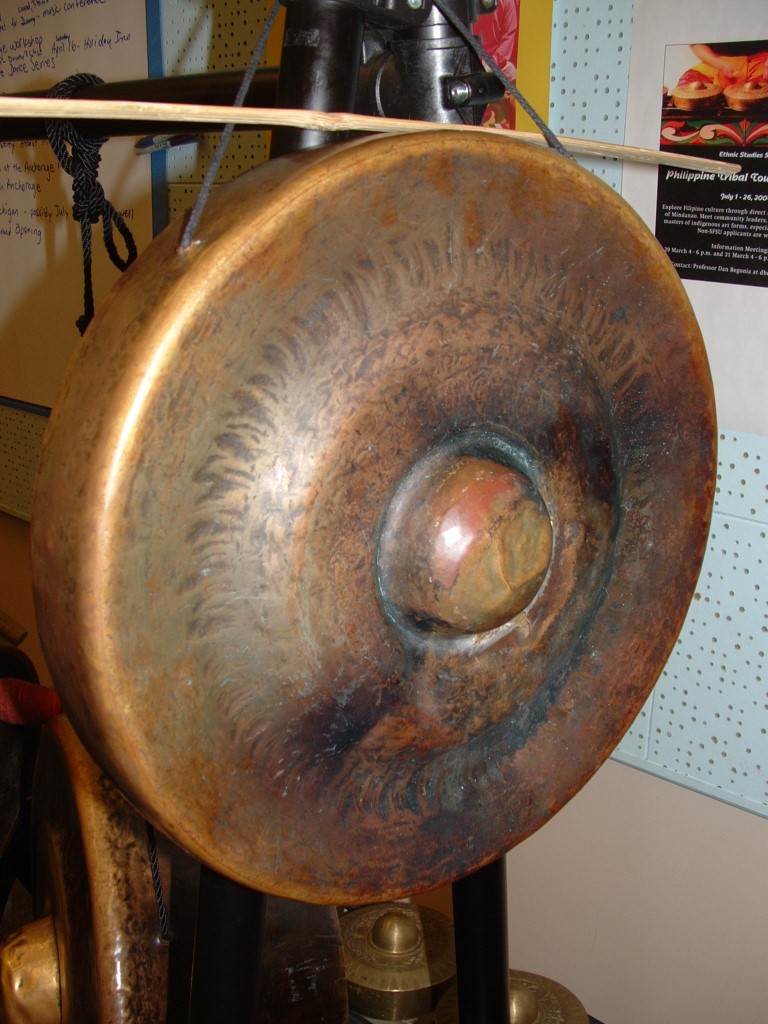
The singular Philippine handheld gong known as the babendil used as a "timepiece" in the kulintang ensemble. This instrument in particular is used by Master Danongan Kalanduyan at San Francisco State to teach his kulintang class. © Wikimedia.org/PhilipDM, CC BY-SA
The bağlama is a traditional stringed musical instrument originating from Turkey and widely used in Turkish folk music. It features a long neck and a pear-shaped body, typically played with a plectrum. The bağlama is known for its distinctive sound and cultural significance in Anatolian music. It is an important instrument in both solo and ensemble performances.
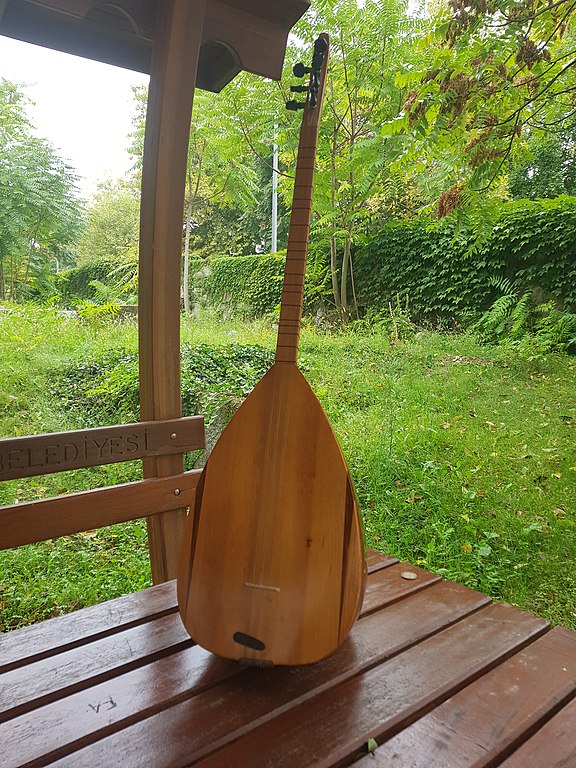
Bağlama © Wikimedia.org/Sakhalinio, CC BY-SA
Bagpipes are a traditional wind instrument consisting of a bag, drones, and a chanter, with origins dating back to ancient times. They are most closely associated with Scottish and Irish music, but variants exist in many cultures worldwide. Bagpipes are often played at ceremonial events and have become a symbol of national identity in Scotland.

Edinburgh Scottish bagpiper. © Wikimedia.org/Jorge Franganillo, CC BY
The bajo sexto is a stringed musical instrument from Mexico, similar in appearance to a twelve-string guitar. It is traditionally used in norteño and conjunto music, providing rhythm and bass lines. The instrument has six double courses of strings and is notable for its deep, resonant sound. Its significance lies in its central role in regional Mexican music genres.
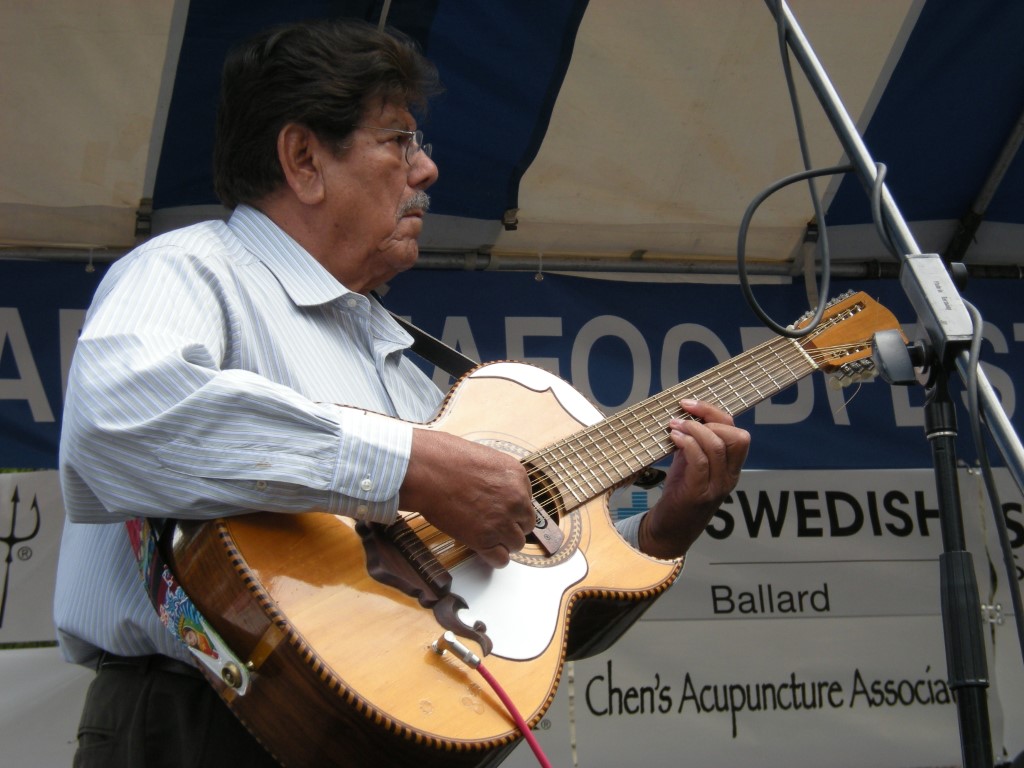
Bajo sexto player José Guadalupe Guzmán performing with Juan Barco y su Conjunto at Ballard Seafood Fest, Ballard, Seattle, Washington. © Wikimedia.org/Joe Mabel, CC BY-SA
Bak is a surname and also a given name found in various cultures, including Polish, Korean, and Turkish communities. It may refer to individuals, families, or historical figures, and its meaning and pronunciation can vary depending on the region. In some contexts, Bak is also used as an abbreviation or acronym in specialized fields. Its significance is largely tied to cultural and genealogical studies.
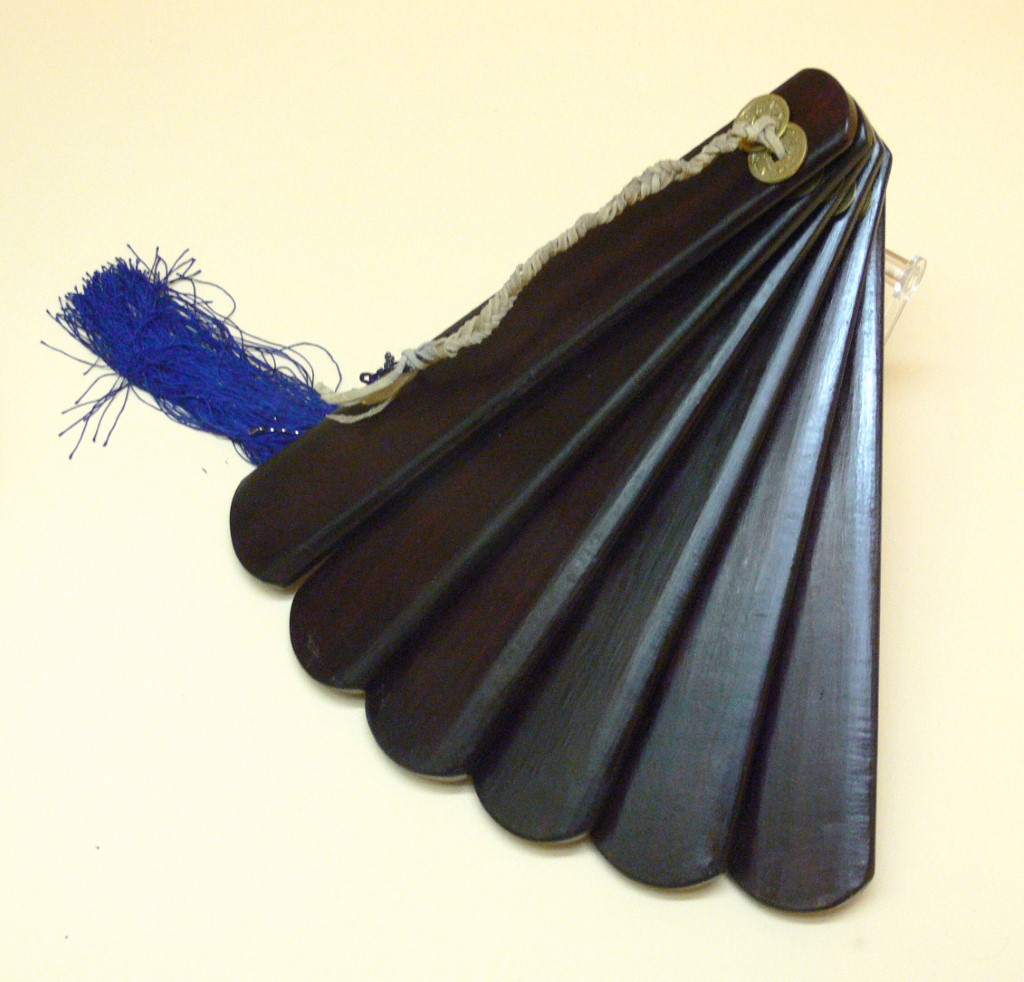
Bak, pearwood and stag leather, Department of Music Ethnology, Ethnological Museum, Berlin, Germany © Wikimedia.org/FA2010, CC0
The balafon is a traditional West African percussion instrument similar to a xylophone. It consists of wooden keys mounted over gourds that act as resonators and is played with mallets. The balafon is significant in the music and culture of countries such as Mali, Guinea, and Burkina Faso.
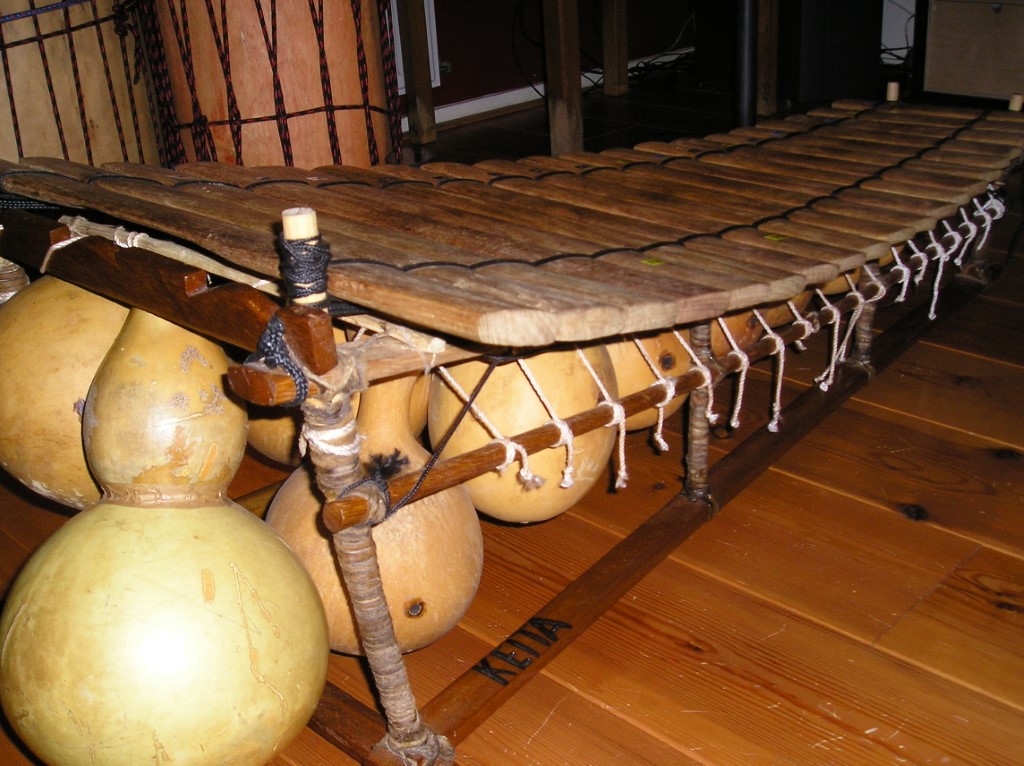
A balafon is a percussion instrument originating from West Africa. The instrument resembles a xylophone. © Wikimedia.org/Redmedea, CC BY-SA
The balalaika is a traditional Russian stringed musical instrument with a distinctive triangular body and three strings. It is widely recognized for its bright, percussive sound and is commonly used in Russian folk music ensembles. Originating in the 18th century, the balalaika has become a symbol of Russian musical heritage. Its unique shape and tone contribute to its enduring popularity in both folk and classical music contexts.
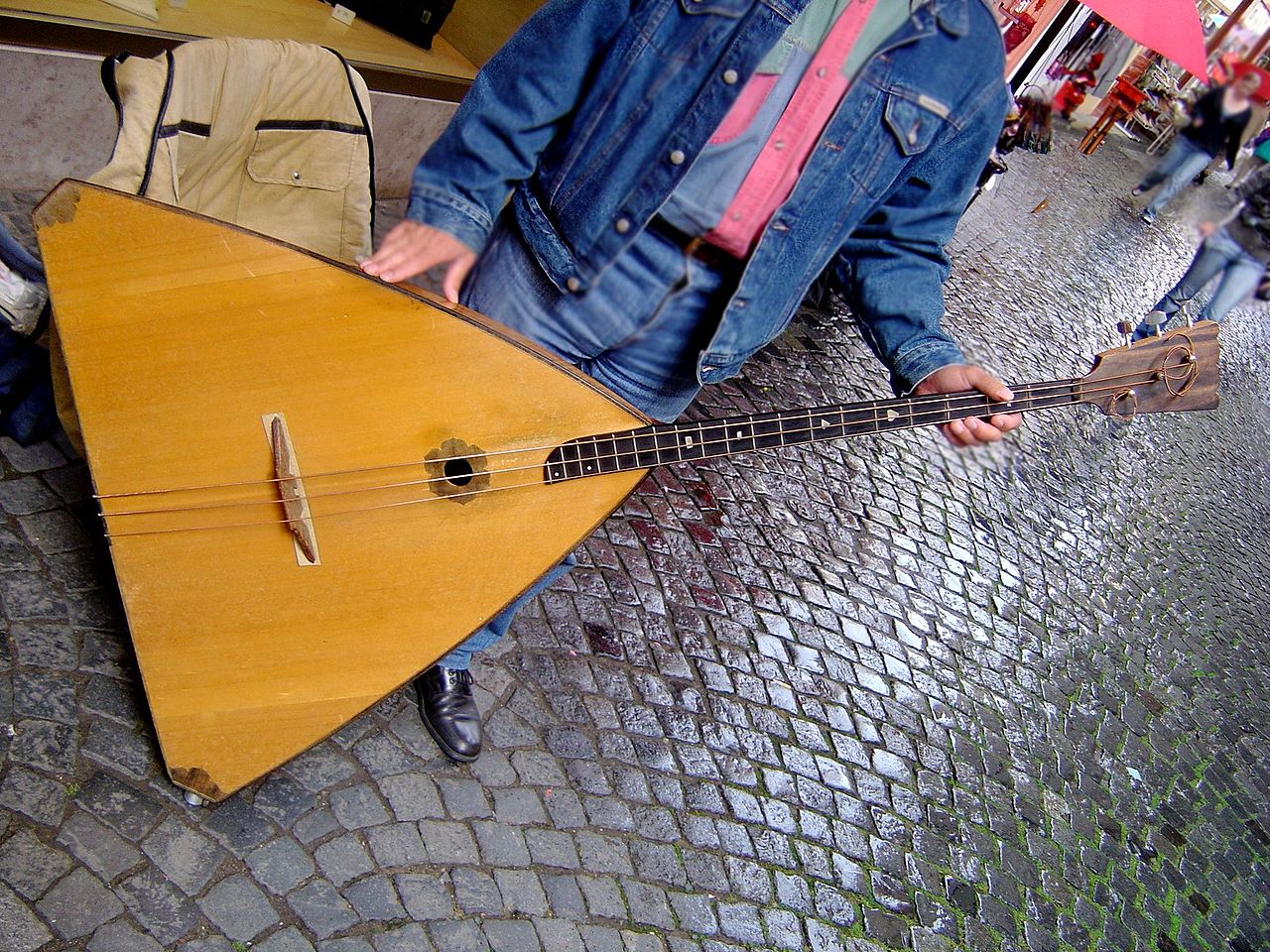
Balalaika bass. August 2006 © Wikimedia.org/MaGz96, CC BY-SA
The bandola is a stringed musical instrument commonly found in Latin American countries, especially Venezuela and Colombia. It is similar to a mandolin and is used in traditional folk music. The bandola typically has four courses of strings and is known for its bright, melodic sound.

Bandola Llanera. © Wikimedia.org/Cristobal Alvarado Minic, CC BY
The bandolin is a stringed musical instrument from South America, particularly associated with traditional music in countries like Ecuador and Venezuela. It resembles a small mandolin and is typically played with a pick, featuring courses of paired strings. The bandolin is significant in folk ensembles and regional musical traditions.
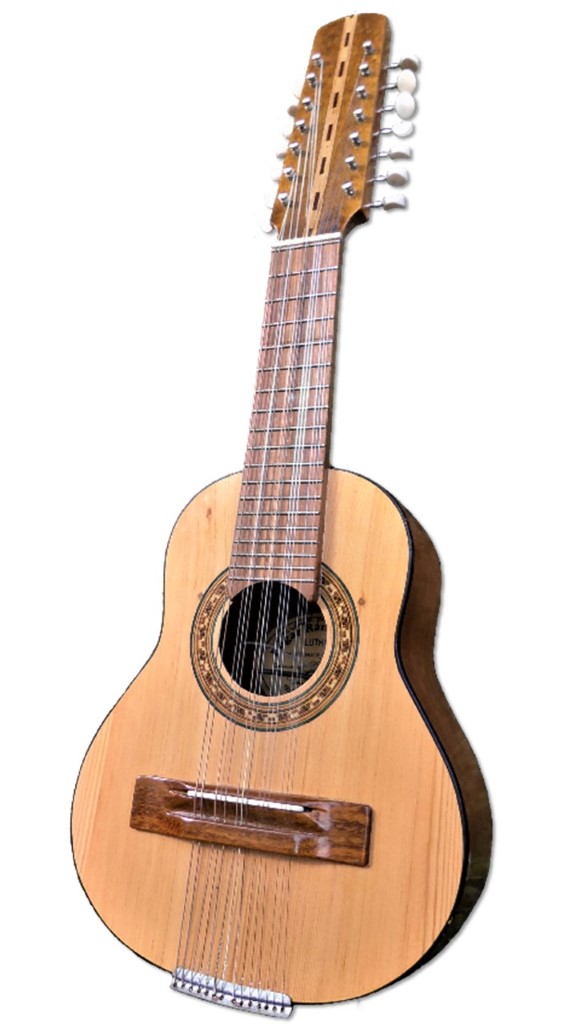
© Wikimedia.org/Miguelitotambor, CC BY-SA
The bandoneon is a type of concertina, a free-reed instrument similar to an accordion, originating in Germany in the 19th century. It is particularly associated with tango music in Argentina and Uruguay, where it became a central instrument in the genre. The bandoneon is known for its distinctive, expressive sound and complex button layout.
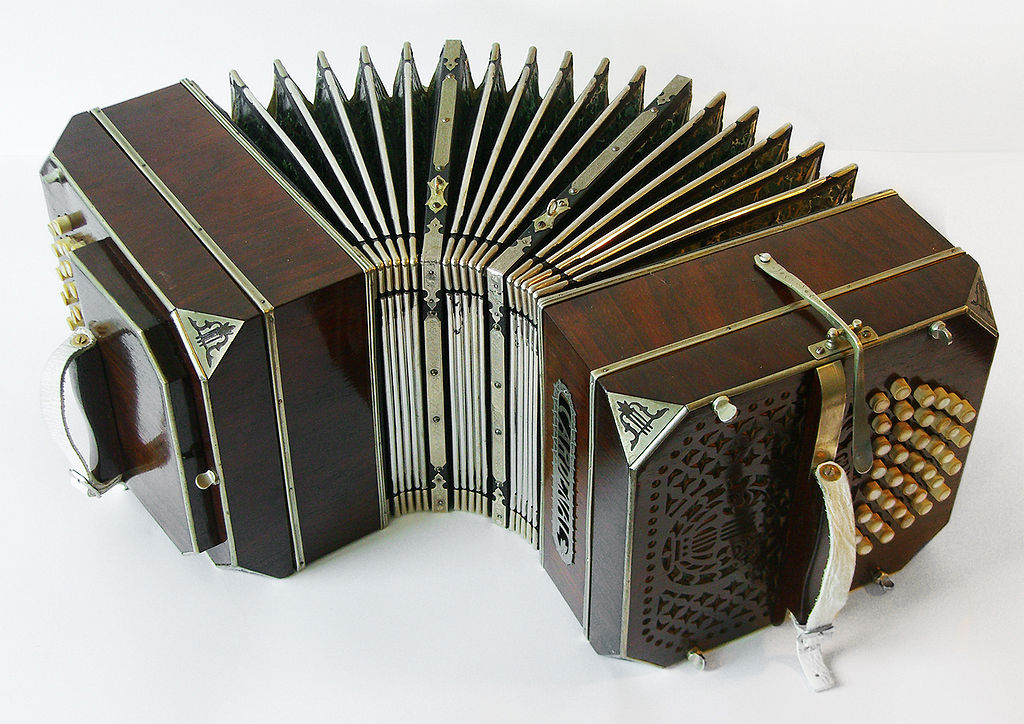
© Wikimedia.org/Pavel Krok, CC BY-SA
The banjo is a stringed musical instrument characterized by a circular body and a long neck. It originated in the United States, influenced by African instruments, and is widely associated with folk, country, and bluegrass music. The banjo is known for its distinctive twangy sound produced by plucking its strings.
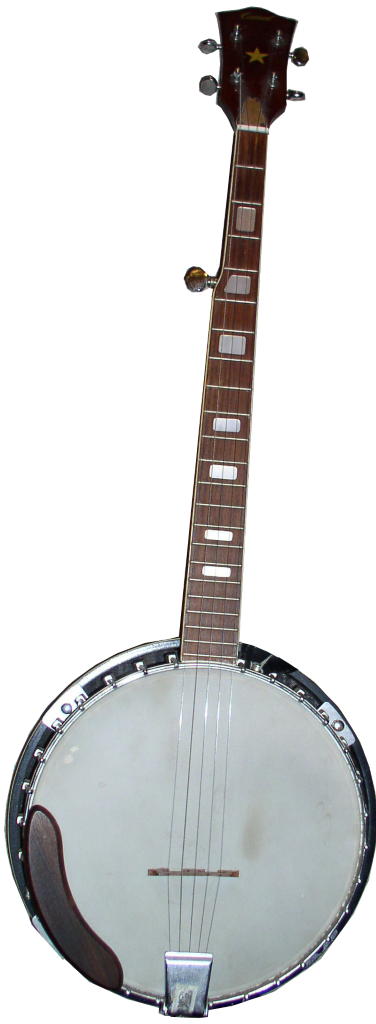
Matheus Ferrero 2016 © Wikimedia.org/Matheus Ferrero, CC0
The bansuri is a traditional Indian bamboo flute known for its melodious and soothing sound. It is an important instrument in Indian classical music and is associated with Hindu mythology, particularly the deity Krishna. The bansuri is widely recognized for its role in both folk and classical performances.
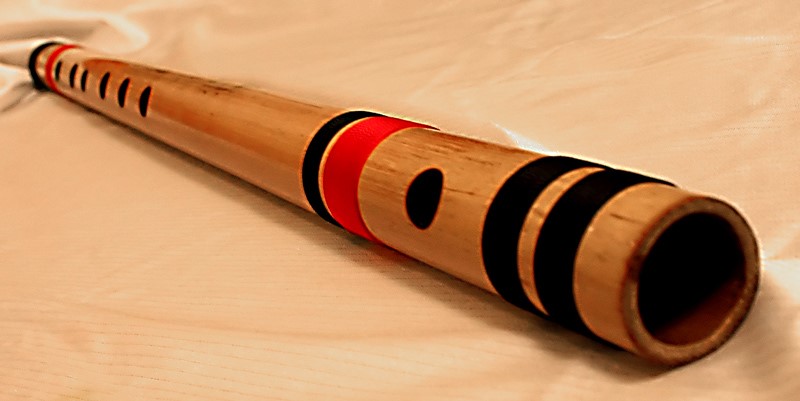
Different scales of Bansuris. © Wikimedia.org/Vamsivadrevu, CC BY-SA
Bara can refer to several things depending on context, including a style of Japanese manga and art that focuses on male same-sex relationships, typically created by and for gay men. The term is also used as a name for places and people in various cultures. In the context of manga, Bara is significant for its representation of masculine characters and its distinction from other genres like yaoi. The genre emerged in Japan in the late 20th century and has influenced LGBTQ+ media.
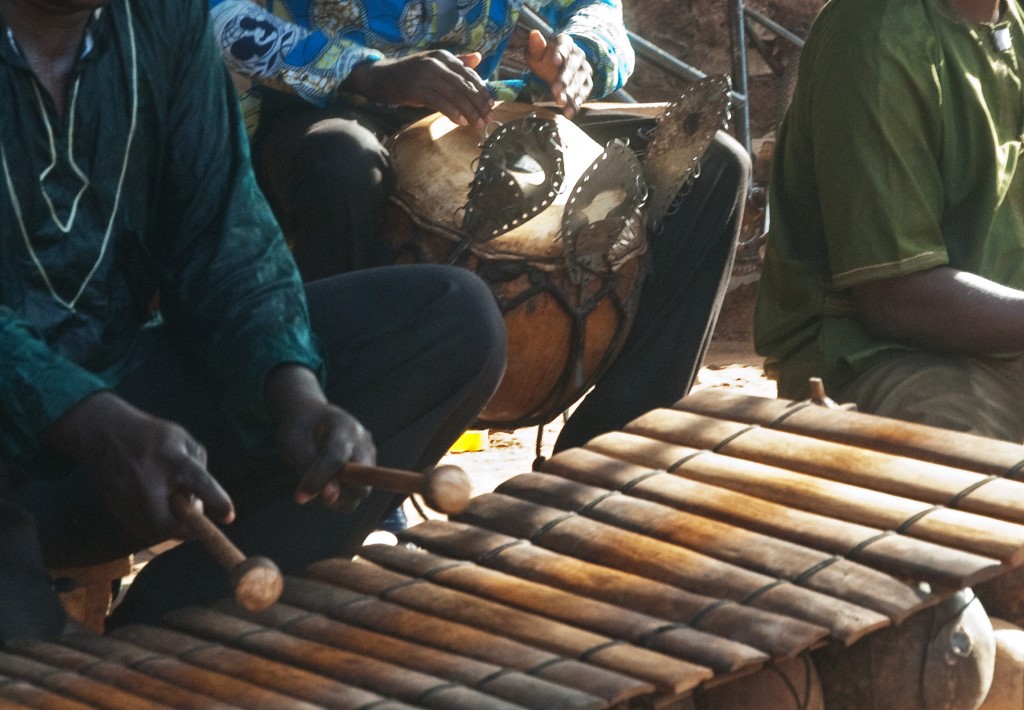
Bara drum (fitted with rattles or shakers called sékèsékè, sege-sege or ksink-ksink) accompanying balafon (Bobo-Dioulasso, Burkina Faso 2015). © Wikimedia.org/Rik Schuiling, CC BY-SA
The baritone horn is a brass musical instrument commonly used in concert bands, brass bands, and military bands. It is pitched in B-flat and has a range similar to that of the trombone but with a mellower tone. The instrument is known for its ability to blend well with other brass instruments and is often used for both melodic and harmonic roles. Its origins trace back to the 19th century in Europe.
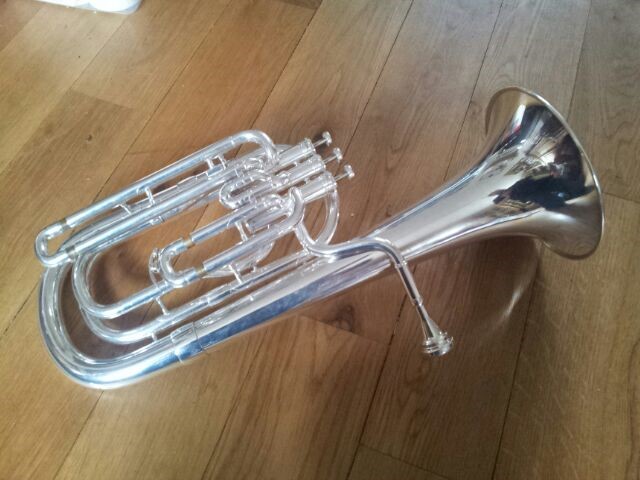
© Wikimedia.org/Shijan Kaakkara, CC BY-SA
A barrel drum is a type of percussion instrument characterized by its barrel-shaped body, typically made from wood or metal. It is played by striking the drumhead with hands or sticks and is found in various musical traditions around the world. Barrel drums are significant in folk, ceremonial, and popular music for their deep, resonant sound.
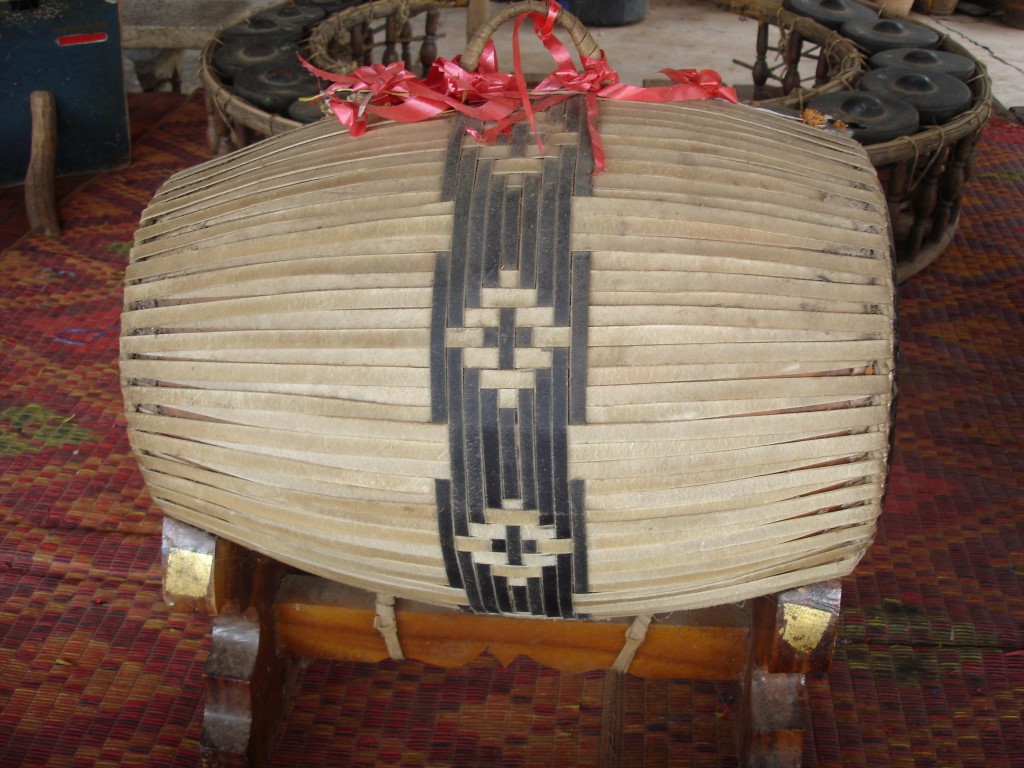
This is two-faced drum called taphon. © Wikimedia.org/Tangmo, CC0
A bass drum is a large percussion instrument that produces a low, deep sound when struck. It is commonly used in orchestras, marching bands, and drum kits across various musical genres. The instrument is known for providing the rhythmic foundation in music, often emphasizing the downbeat. Its size and construction allow it to generate powerful, resonant tones.
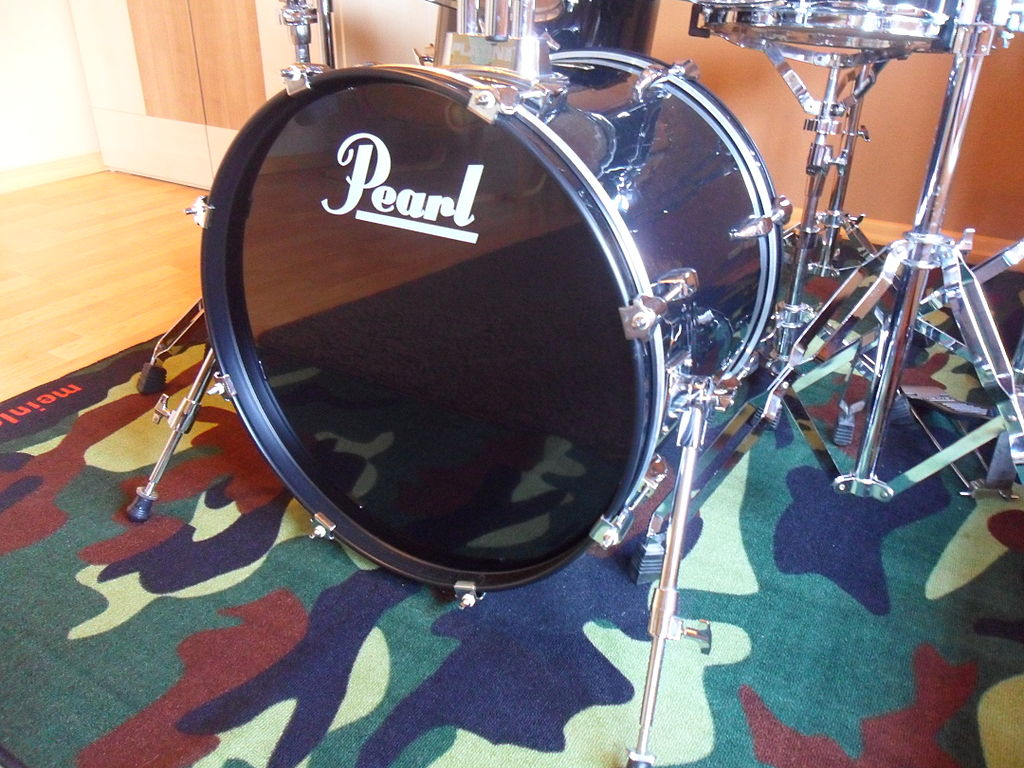
© Wikimedia.org/Independent6396, CC BY-SA
The bass guitar is a stringed musical instrument that provides the low-end sound in many music genres, including rock, jazz, and pop. Typically featuring four strings, it is played by plucking or picking and serves as a bridge between rhythm and harmony in a band. The instrument originated in the 1930s and gained widespread popularity in the 1950s. Its role is fundamental in establishing the rhythm and groove of a musical ensemble.
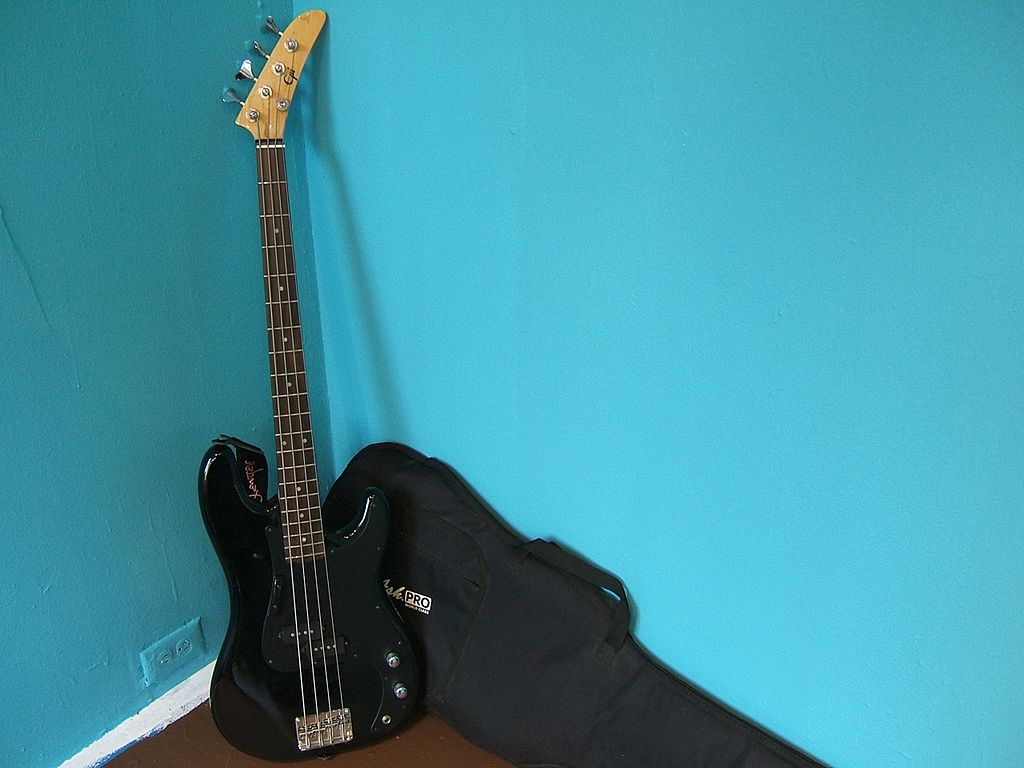
Electric bass guitar. Model EB 100/BK. © Wikimedia.org/Housing Works Thrift Shops, CC BY-SA
The bassoon is a woodwind instrument known for its distinctive, rich, and reedy sound. It originated in the 17th century and is commonly used in orchestras and chamber music. The instrument is notable for its long, folded body and double reed, which contribute to its wide range and expressive tone.
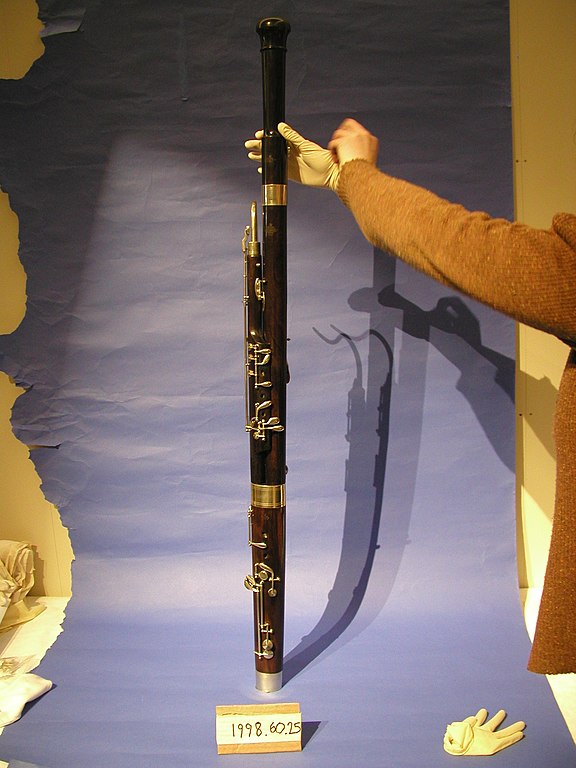
© Wikimedia.org/mark.drummer, CC BY
The Batá drum is a double-headed drum of Yoruba origin, traditionally used in religious and ceremonial music in West Africa and the Americas. It is notable for its hourglass shape and is played in ensembles to create complex rhythms. The Batá drum holds cultural and spiritual significance, especially in Afro-Cuban and Yoruba traditions.

Today, Bata drum and Orisa dances attract a large number of tourists, who see them as pure Yoruba tradition, to Cuba. © Wikimedia.org/ABORISADEADETONA, CC BY-SA
