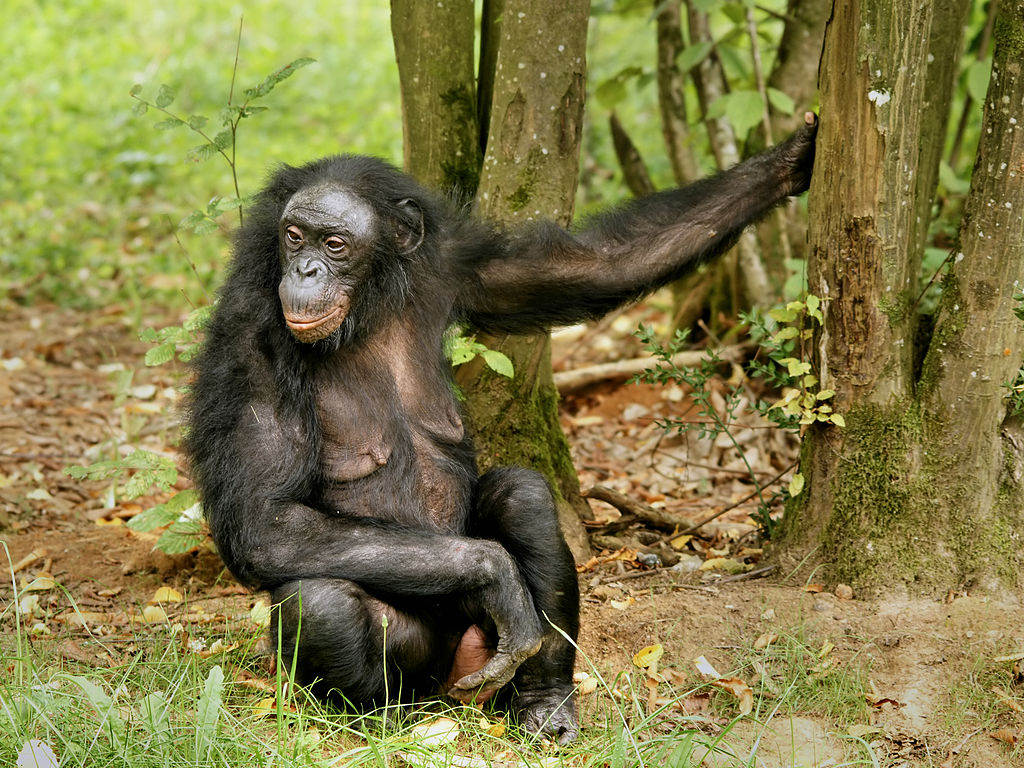
The bonobo (/bəˈnoʊboʊ, ˈbɒnəboʊ/; Pan paniscus), also historically called the pygmy chimpanzee and less often the dwarf chimpanzee or gracile chimpanzee, is an endangered great ape and one of the two species making up the genus Pan, the other being the common chimpanzee (Pan troglodytes). While bonobos are now recognized as a distinct species in their own right, they were initially thought to be a subspecies of chimpanzee (Pan troglodytes) due to the physical similarities between the two species. Taxonomically, the members of the chimpanzee/bonobo subtribe Panina (composed entirely by the genus Pan) are collectively termed panins. The bonobo is distinguished by relatively long legs, pink lips, dark face, tail-tuft through adulthood, and parted long hair on its head. The bonobo is found in a 500,000 km2 (190,000 sq mi) area of the Congo Basin in the Democratic Republic of the Congo, Central Africa. The species is frugivorous and inhabits primary and secondary forests, including seasonally inundated swamp forests. Because of political instability in the region and the timidity of bonobos, there has been relatively little field work done observing the species in its natural habitat. (Source: Wikipedia.org, CC BY-SA)













 Jan 11, 2026